Refrigerator Removal
in Chesapeake
A refrigerator combines bulk, fragile flooring, doors that can swing, and refrigerant rules at end of life. Measure the cabinet and the narrowest doorway, empty all compartments, and identify any water connection before pickup.
Discuss the pickup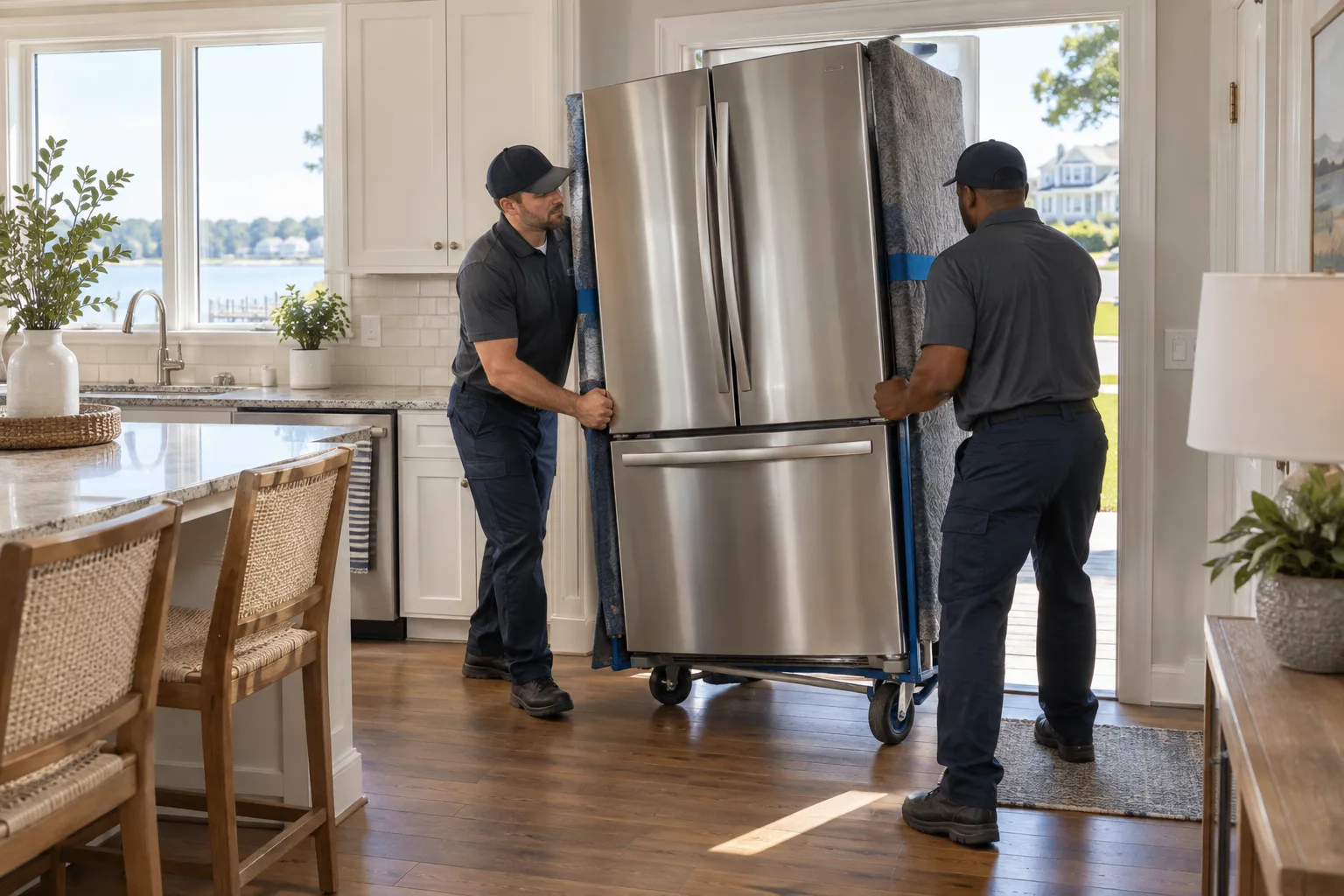 Plan: refrigerator removal
Common scope
- Top-freezer and bottom-freezer refrigerators
- Side-by-side and French-door units
- Garage refrigerators
- Compact refrigerators
- Disconnected ice-maker water lines
Prepare the item and route
- 1Remove food, shelves, drawers, and loose bins.
- 2Defrost and dry the appliance if ice is present.
- 3Have the water line disconnected and contained.
- 4Measure the refrigerator and the narrowest point on the route.

What can affect the estimate
A useful estimate starts with specifics. Mention these details during the first call.
- Cabinet size and door configuration
- Interior or curbside location
- Steps and threshold changes
- Water-line status
- Refrigerant-handling destination requirements
Refrigerator Removal questions
Clear answers before you choose a route and timing.
Should I remove refrigerator doors?
Do not take them off solely for a private in-home pickup unless the removal plan calls for it. Municipal curbside programs may have separate safety rules.
Can a refrigerator be moved with food inside?
No. Empty it completely so loose contents do not shift, leak, or add weight.
What happens to the refrigerant?
Federal rules govern refrigerant recovery before final disposal. Ask how the receiving facility handles refrigerant-containing appliances.
Other appliance services
 Appliance RemovalOne clear plan for removing one appliance or a mixed household load.↗
 Refrigerator RemovalPlan the path, empty the cabinet, and account for refrigerant-safe disposal.↗Washer & Dryer RemovalPrepare hoses, vents, power, and the laundry-room exit before the carry begins.↗
 Stove & Oven RemovalRemove a range after the fuel or electrical connection is made safe.↗
Map the route before removal day.
Call with the appliance type, its location, disconnection status, stairs, and the narrowest point on the route.